
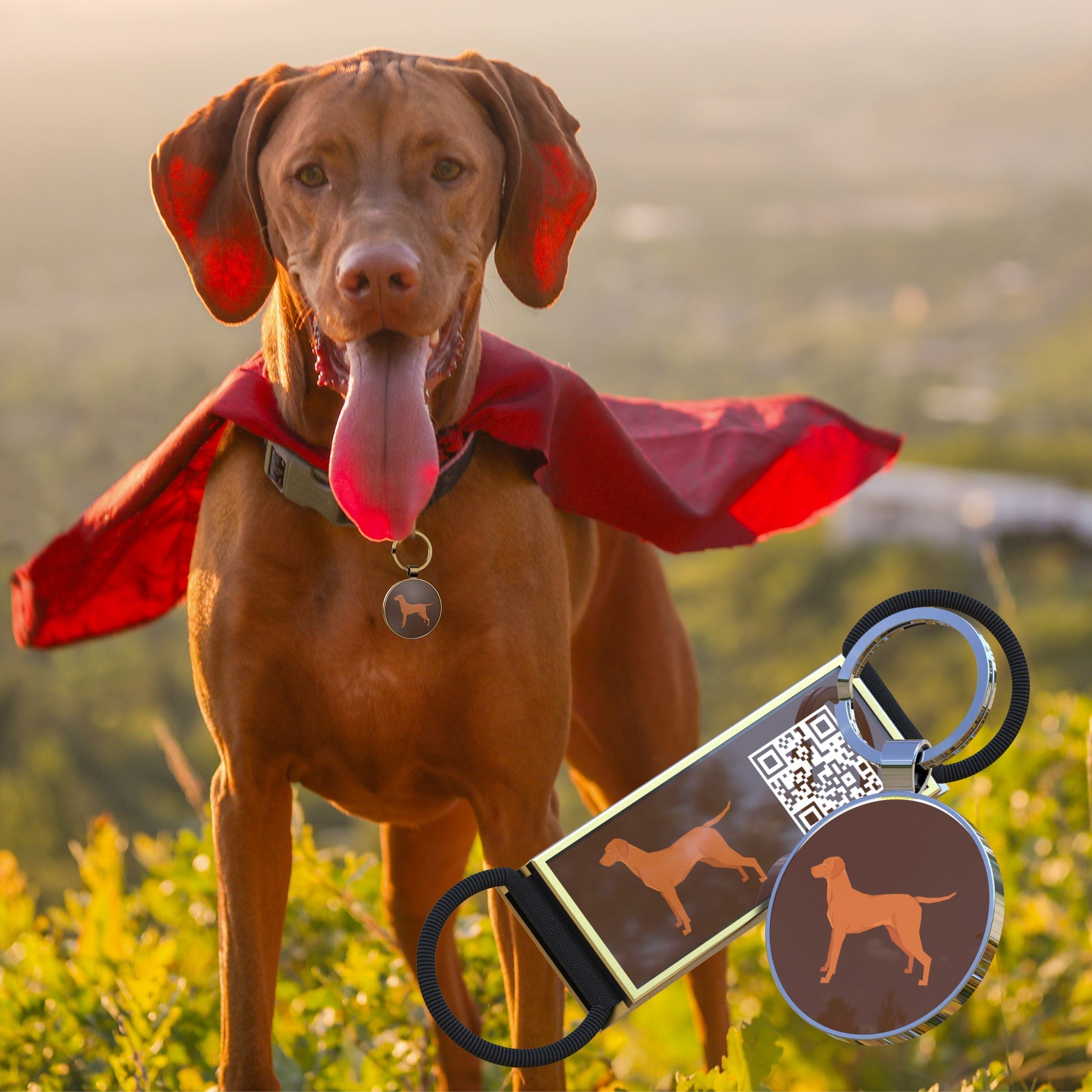
Your pet may not wander far—but if they ever do, a great ID tag can make all the difference. A good pet ID tag is not just a decoration. One of the most important tools to keep your furry friend safe is this.
In this guide, we will explain everything you need to know about making the perfect ID tag. We will cover what information to include and how new options like QR code pet tags are changing the game.
🐾 Why a Pet ID Tag Still Matters (Even Today)
Microchips are great—but they’re not always the first thing a finder checks. A visible ID tag is often the fastest way to reunite a lost pet with its owner.
A good pet ID tag:
- Provides instant identification
- Helps reduce shelter intake time
- Increases the chance of a same-day reunion
- Gives pet parents peace of mind
In short: tags save time, stress, and heartache.
🏷️ What Makes the “Paw-fect” ID Tag?
Some tags hold more value than others. The best pet ID tags balance clarity, durability, and smart design.
Here’s what to look for:
✅ Clear, Easy-to-Read Information
At a minimum, your pet’s tag should include:
- Your pet’s name
- A primary phone number
Avoid clutter. Too much text can make tags hard to read—especially in stressful situations.
✅ Durable, Pet-Friendly Materials
Your pet’s tag should stand up to:
- Daily wear and tear
- Outdoor adventures
- Water, dirt, and rough play
Lightweight, smooth-edged tags are best for comfort—especially for smaller pets.
✅ Smart Features (Like QR Code Technology)
Modern pet parents are upgrading to QR code pet tags—and for good reason.
A QR pet tag allows you to:
- Store multiple phone numbers
- Add your address, vet info, or medical notes
- Update details instantly (no re-engraving needed)
- Help finders contact you with a quick scan
This makes QR tags one of the most flexible and future-proof ID options available.
📌 What Information Should You Include on a Pet ID Tag?
Best practice: Keep the physical tag simple, and let digital profiles do the heavy lifting.
On the tag:
- Pet name
- “Scan Me” or phone number
In the QR profile (if available):
- Owner contact info
- Secondary emergency contact
- Address (optional)
- Medical notes (allergies, medications)
- Vet information
This combination gives you the best of both worlds—quick visibility and detailed backup.
🐶 Matching Style With Safety
Your pet’s ID tag must not be boring. Today's tags come in many styles, shapes, and finishes. You can match your pet's personality while keeping safety a priority.
Popular options include:
- Minimalist designs
- Fun shapes (bones, circles, hearts)
- Neutral or bold color palettes
Just remember: style should never come at the cost of readability.
🧠 Pro Tips for Pet Parents
- Always keep your pet wearing their tag—even indoors
- Check tags regularly for wear or fading
- Update contact info immediately after a move or phone change
- Attach tags securely to both collars and travel carriers
Small habits can make a significant difference.
❤️ Why They Deserve the Best ID Tags
Your pet isn’t just a pet—they’re family. Choosing the right ID tag is one of the simplest ways to protect them every day.
You can choose a classic engraved tag or a modern QR code pet tag. The goal stays the same: you will bring your pets home faster if they get lost.
🐾 Final Takeaway
The paw-fect ID tag is:
- Easy to read
- Comfortable to wear
- Durable for everyday adventures
- Smart enough to grow with your pet
When safety, simplicity, and smart design come together, you get peace of mind—and your bestie gets the protection they deserve.

📚 References
American Kennel Club (AKC) – What to Put on a Dog ID Tag
https://www.akc.org/expert-advice/lifestyle/what-to-put-on-dog-id-tags/
ASPCA – Lost Pets: What to Do and How to Prevent It
https://www.aspca.org/pet-care/general-pet-care/lost-pets
American Humane – Importance of Pet Identification
https://www.americanhumane.org/fact-sheet/microchipping-pets/
VCA Animal Hospitals – Understanding Canine Hearing
https://vcahospitals.com/know-your-pet/hearing-disorders-in-dogs
PetMD – Signs of Stress and Anxiety in Dogs
https://www.petmd.com/dog/behavior/signs-stress-dogs
AKC – Dog Anxiety: Signs, Symptoms, and Solutions
https://www.akc.org/expert-advice/health/dog-anxiety/